The ground in Balbriggan doesn't behave like Dublin's gravels. It's a layered puzzle of glacial till, wind-blown coastal sands, and pockets of soft alluvial clay deposited by the Bracken River. Construction here hits water at shallow depth more often than not. A standard soil mechanics study becomes the contractor's only reliable safeguard. We see boreholes that look firm in the top meter then plunge into loose saturated silt by meter three. For any project near the harbour or along the Naul Road expansion, understanding effective stress parameters isn't optional. It defines the entire foundation logic. Many Balbriggan sites also sit on weathered shale, where strength can degrade fast upon exposure. Interpreting these transitions correctly requires a triaxial testing protocol that replicates actual field drainage conditions, not just quick index tests.
In Balbriggan's layered coastal deposits, a single undrained shear strength value is a liability. You need the full stress path to design safely.
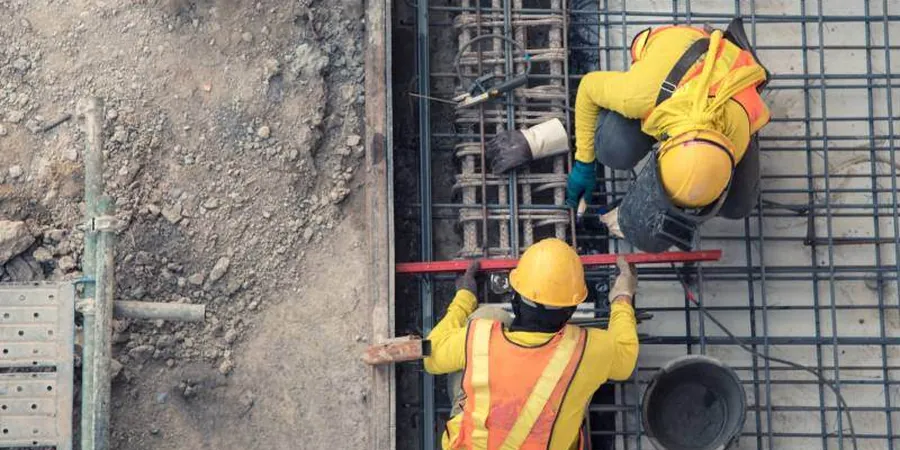
Methodology applied in Balbriggan
Risks and considerations in Balbriggan
Balbriggan's growth from a small fishing village into a commuter town for Dublin has pushed construction onto marginal land. The old marsh areas behind the railway line were filled in decades ago with uncontrolled material. Today, those plots are being developed. The risk is hidden compressible layers that consolidate slowly under load. Without a proper soil mechanics study, a building might settle for years, cracking finishes and distorting door frames. We've seen fill thickness vary by over two meters across a single residential site. Our lab quantifies the compression index (Cc) and the coefficient of consolidation (Cv) to forecast long-term movement. Another hazard is the seasonal fluctuation of the water table, which rises within a meter of the surface in winter across much of the coastal plain. This changes effective stress and can trigger instability in excavations if not factored into the retaining design.
Our services
A comprehensive soil mechanics study in Balbriggan needs to capture the variability from the stiff boulder clay up to the loose dune sands. Our laboratory programme is designed to extract the parameters that structural engineers actually need for limit state design.
Advanced Triaxial and Consolidation Testing
We run CIU and CID triaxial tests at confining pressures matching the expected in-situ stress. For the soft silts near the Bracken estuary, we determine the preconsolidation pressure using incremental oedometer loading. This allows accurate settlement prediction under raft or pad foundations.
Soil Classification and Index Testing
Full physical characterization including particle size distribution by wet sieving and sedimentation. Atterberg limits are measured using the fall cone method. Sulphate content and pH are checked on brownfill sites, a common requirement for Balbriggan's redeveloped plots.
Frequently asked questions
What distinguishes a soil mechanics study from a simple site investigation in Balbriggan?
A site investigation identifies the ground profile and basic strength. A soil mechanics study goes further. It measures the stress-strain behaviour, pore pressure response, and time-dependent settlement characteristics of each layer. For Balbriggan's interbedded sands and clays, this means running consolidated undrained triaxial tests and oedometer tests to give the designer realistic deformation moduli and consolidation rates, not just generic presumptive values.
How do the coastal conditions in Balbriggan affect the laboratory testing programme?
The high groundwater table means many samples are fully saturated. We back-saturate triaxial specimens to replicate in-situ conditions and measure pore pressure parameters B and A. The presence of saline pore water in the harbour area also requires checking for potential chemical attack on concrete, so we include pH and sulphate testing on selected samples.
What budget should I allow for a soil mechanics study on a standard residential plot in Balbriggan?
For a typical residential project requiring a borehole, sampling, and a full lab schedule including triaxial and consolidation tests, the cost generally falls between €2,870 and €4,690. The final figure depends on the depth to competent bearing strata and the number of tests required to cover the variability of the glacial deposits on your specific site.