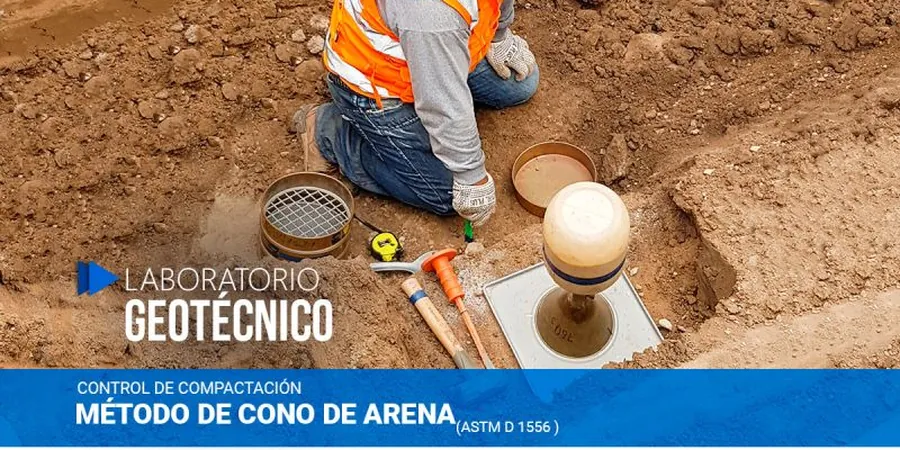
In Balbriggan, we often see compaction problems where the coastal till transitions into the alluvial clays of the Delvin River valley. The surface looks tight, but a few inches down the density drops off hard. That is when a field density test (sand cone method) saves the contractor a lot of grief. We run the ASTM D1556 procedure with calibrated Ottawa sand and a base plate that sits right on the compacted lift. No nuclear gauges, no assumptions — just direct mass and volume. For road subgrades along the M1 corridor or housing developments near Bremore, this test gives the engineering team the numbers they need to sign off on the fill. We also pair it with a Proctor curve when the material is borderline — a single point without the reference curve tells you nothing useful.
A nuclear gauge gives you a number in 60 seconds. The sand cone takes 20 minutes. But when it comes to payment disputes, the sand cone is the one that stands up in the engineer's report.
Methodology applied in Balbriggan
Risks and considerations in Balbriggan
The geological strip under Balbriggan is predominantly limestone-rich till overlying Lower Palaeozoic greywackes. The till itself can be stiff and dense, but pockets of soft silty clay from old estuarine deposits of the Delvin River catch contractors off guard. If a sand cone test fails in one of these pockets, the immediate reaction is to re-roll, but moisture correction often matters more than extra passes. The coastal climate works against you — frequent drizzle pushes the fill above optimum moisture fast. We have seen embankments lose 5% relative compaction in a single afternoon simply because the material went wet and spongy under the sheepsfoot roller. A field density test (sand cone method) run right after a rain event tells you whether you are still inside the spec or whether the material needs to be scarified and aerated before the next lift.
Our services
We deliver field density verification across Balbriggan with a focus on quick reporting that keeps the earthworks schedule on track. Each test includes the full calculation sheet, moisture content from a companion sample, and a comparison against the project Proctor target.
In-Situ Sand Cone Density
Field test per ASTM D1556 for roads, foundations, and utility trenches. We bring calibrated sand jars, base plates, and a portable scale to your site in Balbriggan, delivering results within 24 hours.
Compaction Verification Package
A bundle that couples the sand cone field density test with laboratory Proctor curves, gradation checks, and a compliance report aligned with TII specifications for residential and infrastructure projects.
Frequently asked questions
How much does a sand cone field density test cost in Balbriggan?
For sites around Balbriggan, a single sand cone test typically runs between €90 and €140, depending on access and whether we need to run a companion Proctor curve in the lab. Most earthworks jobs require a package of several tests, and the per-unit price drops with volume.
How soon after compaction can you run the sand cone test?
You can test immediately after the roller passes — no waiting time. The hole is dug by hand, and the material goes straight into a sealed bag for moisture determination. The full procedure takes about 20 minutes per point, and we can have the dry density calculated on site if the contractor needs an instant answer.
Why use the sand cone instead of a nuclear density gauge?
The nuclear gauge is faster, but it relies on a calibration against the specific material and can drift with surface texture, moisture, or mineralogy. The sand cone is a direct measurement. When a compaction payment hinges on a single failed test, the sand cone is the definitive check that contractors and resident engineers both trust.